
Table of Content
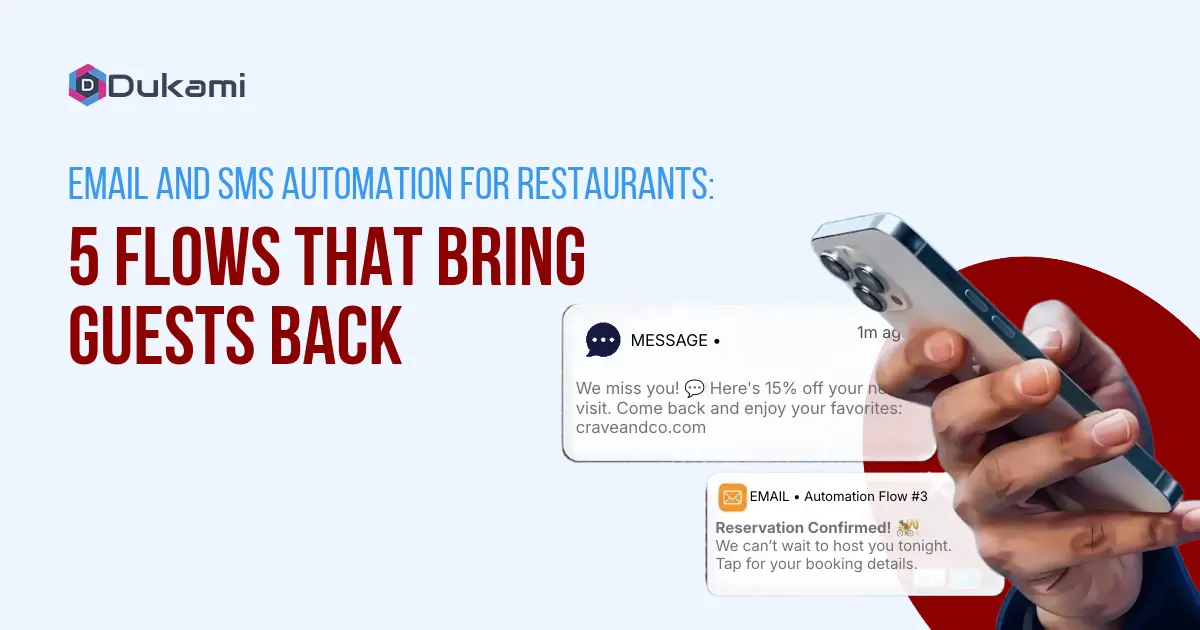
Every restaurant has a version of this problem. A guest books a table for Friday. Friday comes. The table sits empty. Nobody calls to cancel.
The lost cover is only part of it. The bigger loss is the guest who came once, enjoyed the meal, and never returned. Nothing brought them back.
Most restaurants spend their budget on first visits. Almost nothing on the second.
That is a retention problem, not a marketing one. And it is fixable with the contacts you already collect.
Why Restaurants Lose So Many First-Time Guests
One visit is a test drive. Unless something brings the guest back, the next meal goes to a competitor.
Most first-time guests never return. Not because the food failed. Because nothing reached out afterward.
Social media cannot fix this. Your posts reach whoever happens to scroll by. You do not know who saw them, who visited, or who might return.
Email and SMS are the only channels you own. A phone number is a direct line. You are not renting attention from an algorithm. You are following up with a guest who already chose you once.
Most restaurants collect less than a fifth of guest contacts. The ones that collect and use them build a repeat customer base that costs almost nothing to maintain.
The 5 Flows That Bring Guests Back
Each flow has a trigger, a timing, and one clear message. Build them in this order. Start with the ones that pay back fastest.
Flow 1 — The Welcome Flow
Send within 48 hours of the first visit. Thank the guest and mention what they ordered. Offer a reason to come back within two weeks.
The offer should be small and specific. A free dessert. A discount on a return visit. Not "come again soon."
This flow produces the fastest return. A guest who comes back within two weeks is far more likely to become a regular.
Flow 2 — The Birthday Flow
Collect the birthday at first contact. Send one message the week of the birthday, with an offer that feels personal.
Birthday emails outperform almost every other flow. The timing is yours, not the guest's. You are not interrupting. You are showing up on a day they already celebrate.
Keep it short. One reason to celebrate. One reason to book.
Flow 3 — The Reservation Reminder
Send a text 24 hours before and again 2 hours before. SMS wins here because texts get read within minutes.
Include a one-tap cancel or reschedule link. A no-show costs a table. A reminder costs nothing.
This flow pays for itself faster than any other. One saved table a week covers the cost of the tool.
Flow 4 — The Win-Back Flow
Define "lapsed" against your own reorder interval. A pizza shop's lapsed guest is 30 days. A steakhouse is 90.
Build three messages. A 30-day reminder. A 60-day reason-first offer. A 90-day last call with list cleanup.
The 30-day message should not be a discount. It should be a reminder. A discount at 30 days teaches guests to wait for the next one.
Flow 5 — The Thank-You and Review Request
Send within two hours of a visit. Thank the guest, then route happy ones to Google.
Route unhappy ones to your manager, not to the public review. A calm reply in private beats a public complaint.
The two-hour window matters. Later feels automated. Sooner feels attentive.
Automation Does the Asking
Five flows on paper mean nothing if no one triggers them. The system is what turns a plan into a habit. This is where digital marketing services for restaurants earn their keep.
Here is what the system handles while your team works the floor:
- Every visit triggers a review request by text or email.
- The link lands the guest directly on your Google review form.
- Each message greets the guest by name and references their order.
- One gentle nudge follows three to five days later. Then it stops.
- You see every new review, how fast you replied, and whether your rating moved.
Your team never has to remember. The system asks at the right moment, every time. You get a steady stream of reviews without a single awkward conversation.
Relying on memory fails. A system does not forget. Two numbers tell you whether the flows work. They are not the same number. Mixing them up hides the truth.
What to Measure
Flow conversion is the percentage of guests in a flow who act. If 200 guests enter the welcome flow and 40 book a second visit, the flow converts at 20%.
Program reactivation is the percentage of your whole list that comes back. This is slower and wider. It tells you whether the list is healthy, not whether one message worked.
Then ask the only question that matters. Did they place a second order?
A flow that produces clicks but no second orders is broken. A flow that produces a second order is doing its job. Track this monthly.
Your First 30 Days
| Week | Focus | What to Do |
| Week 1 | Capture contacts | Add a sign-up at the host stand, on receipts, and to your website. Choose one email and SMS tool. Import past guests. |
| Week 2 | Build Flows 1 and 2 | Write the welcome and birthday messages. Set the triggers and timing. Test with your own number. |
| Week 3 | Build Flows 3 and 4 | Set up reservation reminders and the win-back sequence. Define "lapsed" against your reorder interval. |
| Week 4 | Launch Flow 5 and review | Turn on the review request. Check flow conversion and second-order rate. Adjust one message, not five. |
Conclusion
Five flows. A welcome, a birthday, a reminder, a win-back, a thank-you. None of them require an ad budget. All of them require a system that runs without your team remembering.
Start with two flows this week. Add the rest once they work. Then measure second orders, not opens.
Ready to stop losing guests after one visit?
As a restaurant marketing agency Bay Area owners rely on, Dukami builds the capture, the flows, and the reporting. Request a free Automation Audit and we will show you which flows you are missing.
