
Table of Content
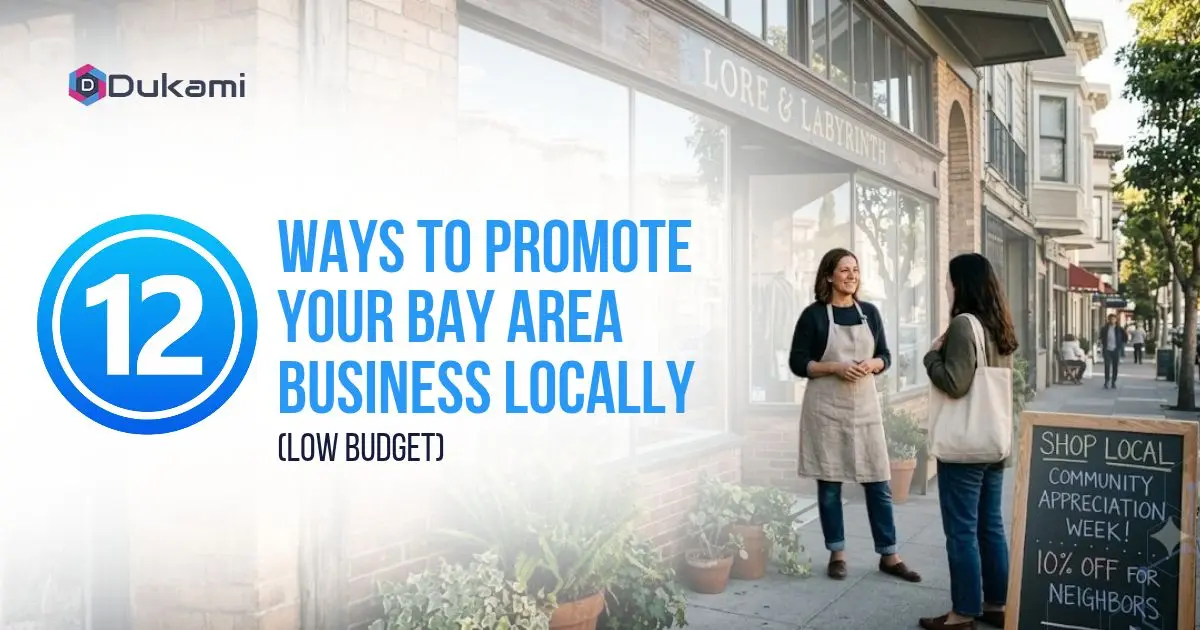
A bakery owner in Oakland has $500 to spend on marketing this month. She has already tried boosting posts. She got likes from people in three different countries. None of them walked through her door.
She is not short on effort. She is short on a plan that matches her budget. Most "low-cost marketing" advice is written for companies with a team and a cushion. This is for the owner doing it between shifts.
Here are 12 tactics that work on a tight budget.
Why a Tight Budget Is Not the Problem
The size of your budget is rarely the reason marketing fails. The reason is almost always that the money and effort go to channels that cannot reach local customers.
The real problem: unmanaged marketing. Spending $200 on a boosted post that reaches the wrong country is not a budget problem. It is a targeting problem. The same $200 spent on a Google Business Profile, reviews, and one local partnership would have produced calls.
What a managed budget looks like. Every dollar should connect to a local action: a call, a direction request, a walk-in, or an online order. If a tactic cannot be tied to one of those, it does not belong in a tight budget.
The 12 tactics at a glance. Six tactics cost only time. Six cost a little money. Start with the free ones. Add the paid ones once the foundation is working.
Start With the Free Tactics
These cost almost nothing but attention. They are the base everything else stands on. A small business digital marketing agency Bay Area owners trust will start here, not with ads.
- Google Business Profile management. Claim it. Choose the exact category. Add 20 or more real photos. Keep hours accurate. Post weekly. A complete profile is the cheapest local visibility you will ever buy, because it is free.
- Review generation system. Ask every happy customer at the moment they are satisfied. Hand them a QR code card that opens your review page. Respond to every review within 48 hours. Reviews drive both rankings and trust.
- Local SEO pages built and maintained. Create one page per service in each city you serve. "Plumber in Fremont." "Dentist in San Jose." Mention local landmarks and neighborhoods. Thin, generic pages do not rank in competitive Bay Area searches.
- Social media content and scheduling. Social media is the most effective advertising channel according to 75% of small business owners. Post three times a week. Show real work, real staff, and real customers. Consistency beats volume.
- Community partnership outreach. Partner with a nearby business that serves the same customers but does not compete with you. A cafe and a bookstore. A gym and a juice bar. Cross-promotions cost nothing and reach people who already shop locally.
- Referral program setup. Ask happy customers to refer a friend. Offer a small reward on both sides. Referrals are the cheapest customer acquisition channel that exists, because trust is already built.
Add These Paid Tactics Next
These cost money, but each one has a clear cost and a measurable local outcome. Add them after the foundation is running.
- Micro-influencer campaigns. Nano influencers with 1,000 to 10,000 followers typically charge $10 to $100 per post. Micro influencers with 10,000 to 100,000 followers charge roughly $100 to $500 for an Instagram post. Choose local creators whose audience lives in your neighborhood.
- Local print placement. Community newspapers, neighborhood newsletters, and local magazines still reach specific ZIP codes. Print is not dead. Untargeted print is dead. One local placement with a tracked QR code is worth ten national impressions.
- Direct mail campaigns. A postcard to a five-mile radius, with a clear offer and a QR code, still produces responses in dense Bay Area neighborhoods. Keep the list tight. A small, local list beats a large, scattered one.
- Email and SMS retention flows. Email and text to your existing customers cost almost nothing per message. Send a thank-you after a visit. Send a birthday offer. Send a win-back reminder in 60 days. Retention is cheaper than acquisition.
- Google Ads management. The average Google Ads cost per click is $5.42. On a $300 budget, that buys roughly 55 clicks. Target one city and one high-intent keyword. Track calls, not clicks.
- Event and sponsorship coordination. Sponsor a school fundraiser, a neighborhood festival, or a local sports team. You get visibility, goodwill, and often a mention in the local press. Choose events your customers actually attend.
The Budget at a Glance
| Tactic | Cost | Time | Best For |
|---|---|---|---|
| Google Business Profile | Free | 2 hours setup, 30 min/week | Every local business |
| Review system | Free | 15 min/day | Every local business |
| Local SEO pages | Free (your time) | 4 hours per page | Service businesses |
| Social media | Free | 3 hours/week | Every local business |
| Community partnerships | Free | 2 hours/week | Neighborhood businesses |
| Referral program | Free (reward cost) | 1 hour setup | Every local business |
| Micro-influencers | 10–500 per post | 2 hours coordination | Consumer-facing businesses |
| Local print | 100–500 per ad | 1 hour | Neighborhood businesses |
| Direct mail | 200–500 per campaign | 3 hours | Geographic targeting |
| Email and SMS | 0–50/month | 2 hours setup | Retention-focused businesses |
| Google Ads | 200–500/month | 1 hour setup, 1 hour/week | High-intent services |
| Event sponsorship | 100–1,000 | 3 hours | Community-focused businesses |
Your First 30 Days
You do not need to fix everything at once. Work through these four weeks in order.
| Week | Focus | What to Do |
|---|---|---|
| Week 1 | Audit and setup | Complete your Google Business Profile. Set up call tracking. Choose one social platform. Print QR code cards for reviews. |
| Week 2 | Foundation launch | Post three times on social media. Ask 10 customers for reviews. Reach out to one local business about a partnership. |
| Week 3 | First paid test | Launch one Google Ads campaign targeting a single city and one high-intent keyword. Set a budget you can sustain. |
| Week 4 | Reporting and review | Check calls, direction requests, and review count. Compare them to week one. Cut what produced nothing. Double down on what worked. |
What Not to Do on a Tight Budget
A tight budget rewards discipline. Here is what to refuse to do with your money.
Do not buy followers or fake reviews. Fake signals get detected and removed. One scandal costs more than a year of honest work.
Do not spread the budget across too many channels. Four half-funded channels produce nothing. One well-funded channel produces customers.
Do not launch without tracking. If you cannot measure calls, forms, and walk-ins, you cannot tell what worked. Tracking comes before spending.
Do not skip the foundation. Ads fail when the Google Business Profile is empty and the reviews are stale. Fix the base before you buy traffic.
Conclusion
You do not need a big budget to win local customers. You need the right tactics, done consistently. Start with the free ones. Fix the foundation. Then add one paid tactic.
If you want help choosing the right mix, a Bay Area small business digital marketing agency like Dukami can build a plan around what you can actually spend. We set up the foundation, run the paid tests, and report on calls and walk-ins, not likes.
