
Table of Content
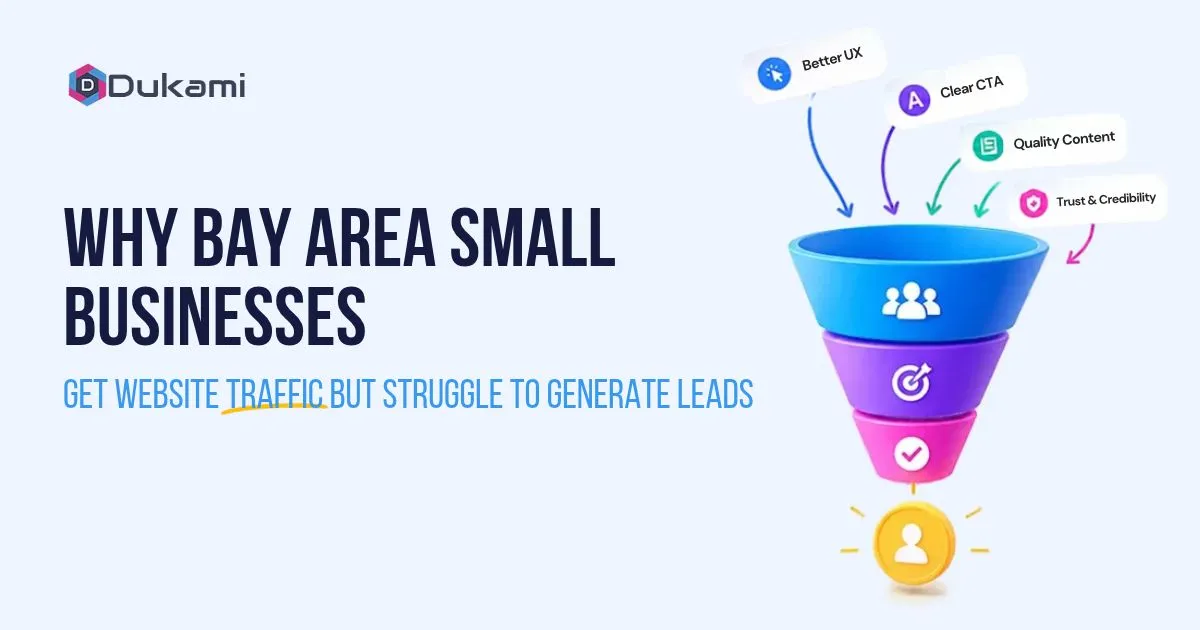
"More traffic will fix my lead problem."
Most owners believe that. They spend another thousand on ads, watch the visitor count rise, and find the same empty inbox waiting for them.
The visitors came. They just did not act. That is not a traffic problem. It is a conversion problem.
This blog shows where leads actually leak, how to run a 15-minute audit on your own site, and which fixes pay back fastest.
The Traffic Trap
A rising visitor count feels like progress. It is the easiest number to show a partner or a banker. It is also the least connected to revenue.
Traffic feels like progress. A graph that climbs upward is satisfying. It tells you the ads are running and the pages are loading. It says nothing about whether anyone bought your offerings.
Why "more traffic" is the wrong fix. Sending more people into a broken funnel multiplies the loss. If one in a hundred visitors converts, doubling traffic doubles your costs and your leads by the same small amount.
Fix the leak first. Then pour water in.
The Math That Changes the Conversation
Conversion rates are not random. They cluster in patterns, and the gap between average and excellent is wide enough to change how you spend.
The typical small business site converts a small slice of its visitors. Most land somewhere in the low single digits. If you are at 1%, you are not unusual.
The best sites convert several times higher. A well-built site turns a meaningfully larger share of the same traffic into enquiries. Same visitors, more leads.
The lever is conversion, not volume. Moving from a weak rate to a strong one produces more leads than doubling your ad budget. It also costs less, because you already paid for the traffic.
That is the whole argument. A conversion improvement is the cheapest growth available to you.
Why Traffic Is Worth Less Than It Used to Be
Getting visitors has become harder. Google now answers many questions itself, so fewer people arrive at any website at all.
68% of U.S. Google searches end without a click. That is up from about 60% in 2024, according to a 2026 study. Two out of three searches never reach a website.
If you cannot win more clicks, win more conversions. The visitors you do get are more precious, not less. Every one of them counts more than they did three years ago.
The businesses adapting to this are working on the page, not the ad budget.
Where the Leads Leak (Three Buckets, Not Nine Reasons)
Most articles list nine or twelve reasons a site fails. Nobody remembers nine reasons. Three buckets cover almost every case.
Bucket 1 — The wrong people arrive. Your ad or search result promised something the page does not deliver. The visitor leaves because they are in the wrong place.
Bucket 2 — The right people do not believe you. No reviews, no names, no proof, no clear address. The visitor cannot find a reason to trust a stranger.
Bucket 3 — The right people cannot act. The form is long. The phone number is hidden. The booking takes five taps on a phone that loads slowly.
Name your bucket before you change anything. Most fixes follow from that one answer.
The 15-Minute Conversion Audit
You do not need software to find the leak. You need fifteen minutes and a critical eye.
Four questions to ask about every page:
- Does the headline match the promise that brought them?
- Is the phone number visible without scrolling?
- Is there proof within one screen?
- Can someone act in three taps or fewer?
How to score what you find. Give each page a score out of four. Any page scoring two or below is a leak. Fix the lowest scorer first.
Do this on your phone, over cellular data, not in an office. That is how your customer experiences it.
The Fixes, Ranked by Effort and Impact
Not every fix is worth the same effort. Work in this order, and you will see movement in weeks rather than quarters.
Fix these first: headline, CTA, phone number. Change one sentence at the top. Change "Submit" to "Call now". Put the number in a sticky header. Three changes, one afternoon, and the biggest single jump.
Fix these next: trust signals and forms. Add three reviews near the button. Add a licence number and a real address. Cut the form to name and phone.
Fix these later: retargeting and content. These compound over time, which is why they come last. A digital marketing agency for small businesses will usually sequence them the same way, because early wins fund later work.
Your First 30 Days
You do not need to rebuild the whole site. Work through these four weeks in order.
| Week | Focus | What to Do |
|---|---|---|
| Week 1 | Run the audit | Score your five most valuable pages out of four. Do it on your phone over cellular data. Note the lowest scorer. |
| Week 2 | Fix the top three leaks | Rewrite the headline on the worst page. Move the phone number into the header. Cut the form fields. |
| Week 3 | Add trust and reduce friction | Add three reviews near the button. Add a licence number and address. Test the booking flow on a phone. |
| Week 4 | Measure and repeat | Compare calls and form fills to the week before. Move to the next lowest-scoring page. |
Conclusion
Traffic is not the problem. The gap between arrival and action is the problem.
Name your bucket. Score your pages. Fix the lowest scorer first. Then send more traffic into a funnel that actually works.
If you want the audit done for you, a digital marketing company for small businesses like Dukami reviews your pages, names the leak, and fixes the highest-impact items first.
