
Table of Content
TL;DR
Quick Wins
- More than 15,000 restaurants compete here. Visibility wins.
- Fix your Google Business Profile first. It delivers results within weeks.
- Build a Review System That Runs Itself. Most diners read reviews first.
- Target specific, high-intent keywords. Broad keywords waste money.
- Use AI search optimization. More diners ask ChatGPT and Gemini.
- Keep guests coming back with automated email and SMS flows.
Your next customer is scrolling right now. They are hungry, nearby, and deciding where to eat. The one with the best online presence wins. This guide shows you how to win that moment.
Why the Bay Area Is Different
Running a restaurant here is challenging. Costs keep climbing. Competition continues to intensify. And diners have more choices than ever before.
Commercial rent in San Francisco and San Jose ranks among the highest in the USA. Labor costs have surged in recent years. Ingredients cost more every season. Meanwhile, new restaurants keep opening.
Many owners tell us the same story. They work harder than ever. Yet profits stay thin.
People Still Want to Eat Out
Here is the good news. Dining out remains strong across the Bay Area. The overall restaurant revenue is projected to grow 3.3% in 2026. That brings total industry revenue to $1.55 trillion, up from $1.50 trillion last year.
More than 15,000 dining establishments operate across the Bay Area. San Francisco alone hosts approximately 3,700. San Jose adds at least 2,700. The East Bay contributes thousands more.
To win here, you must be easy to find, easy to trust, and easy to book. If diners cannot locate you online, they choose a competitor.
Know Your Diner, City by City
Bay Area diners share certain traits. Many care about health. They ask where food comes from and how it is prepared. They lean toward organic and vegan options. They also watch prices but will pay for quality.
Beyond those shared traits, each city has its own character. What succeeds in one neighborhood may fail in another.
Shared Traits Across the Bay
- Health-conscious diners who ask questions
- Interest in food sourcing and preparation
- Preference for organic and sustainable options
- Price awareness, but willingness to pay for quality
City-by-City Differences
Owners we interviewed said guests lose interest in restaurants with generic menus. Building a menu around your core diner gives your marketing a clear message. Whether that is a lunch crowd, families, or vegans, specificity wins.
Six Steps to Local Visibility
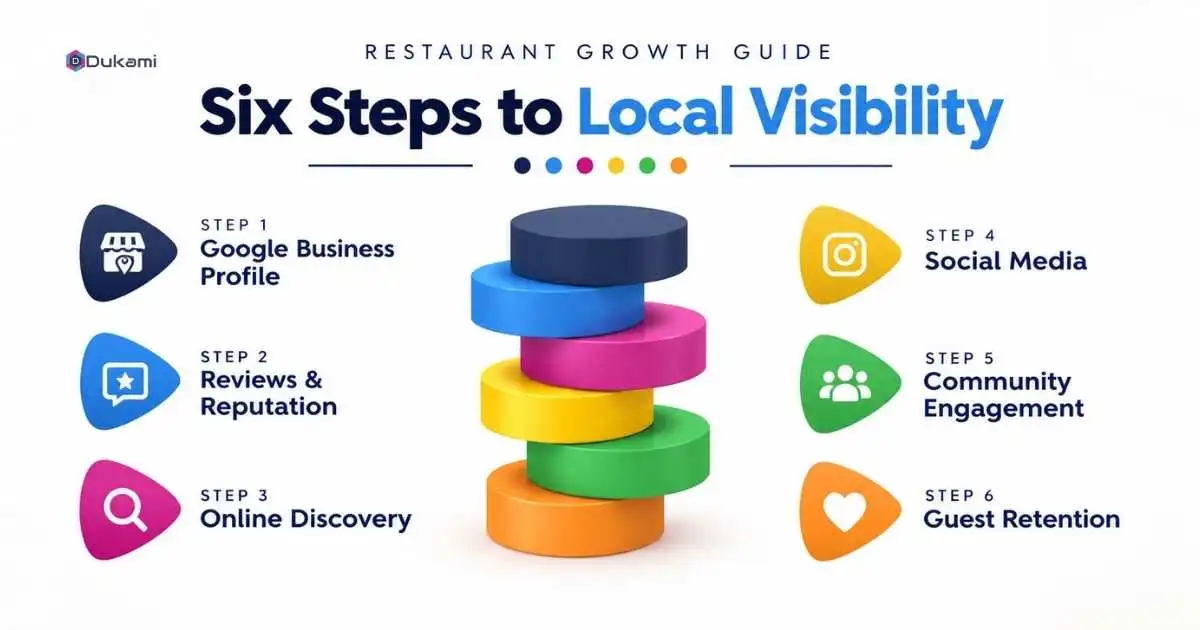
This guide is built around six practical steps.
Step 1: Claim and Optimize Your Google Business Profile (GBP)
To capture diners where they search, start with your GBP. It is the foundation of local visibility. Your GBP delivers the fastest results. It is where diners see your name, rating, photos, hours, and menu. Often they check it before visiting your website.
About 62% of diners use Google to find restaurants. An incomplete profile loses them before they consider you.
Why It Matters
- It is the first thing diners see in local search
- It shows your rating, hours, photos, and menu at a glance
- Active profiles help to rank higher
Your Checklist
Complete these tasks:
-
✓
Select the correct primary category, like "Indian restaurant."
Add secondary categories too. -
✓
Upload at least 20 current photos of food, interior, and team. -
✓
Add menu, reservation, and ordering links. -
✓
Post a new update or offer weekly. -
✓
Keep hours accurate, including holidays. -
✓
Respond to questions and every review.
This costs nothing. It takes a few hours. Results often appear within a few weeks .
One of our clients–a San Jose restaurant– had weak visibility on local searches. We have updated their GBP with authentic information. We also added real pictures of their kitchen, interiors, dishes, exteriors, and team. Within one week, their direction requests rose from 3 to 29 per week.
For a complete walkthrough with category tips and a photo plan, read our guide: Google Business Profile for Bay Area Restaurants: A 30-Minute Setup That Brings More Calls and Bookings.
Step 2: Build a Review System That Runs Itself
About 90% of consumers read reviews before choosing a food outlet. For restaurants, reviews often decide who gets the table. Do not leave them to chance. Build a system that collects them consistently.
Why Reviews Matter
- They influence where people eat
- They can affect your Google ranking
- They build trust with first-time diners
A strong review profile sets you apart from competitors. It also signals to Google that your restaurant is active and trusted.
How to Collect More Reviews
- Place a QR code on receipts and table cards.
- Train your staff to ask satisfied guests at meal's end.
- Send an automated text or email asking for reviews.
- Respond to every review within 48 hours.
- Address complaints calmly. Offer to fix the issue.
We have observed some of our clients not replying to bad reviews. It is not a good practice because negative reviews create suspicion. We tell them to respond to such reviews with a practical solution.
For scripts your servers can use and templates for replying to negative reviews, see our guide: How to Get More 5-Star Reviews Without Awkward Asking (With Scripts for Servers).
Step 3: Get Discovered Online
Most restaurants struggle here. You have excellent food. But diners cannot find you. Here is how to increase your restaurant's online visibility:
Local SEO
Ensure your name, address, and phone number match everywhere. Google trusts consistency. Create pages around actual searches. Think "best Afghan restaurant in Fremont" or "family-friendly dinner in San Jose."
Without SEO, searching diners never see you. They find your competitor instead.
Google Ads (PPC)
PPC reaches people actively searching right now. Use it for high-intent phrases like "restaurants open now near me." Target by city. Begin with a small budget. Track calls, direction requests, and bookings.
Avoid wasting money on broad keywords. Focus on searches that lead to visits.
AI Search
Ask ChatGPT, “which is the best restaurant in San Francisco?” If your restaurant does not show up in the response, you need to optimize your website for AI searches.
More diners now ask ChatGPT or Gemini where to eat. To appear, publish clear menu pages and FAQs. Keep your details consistent across the web. Add schema markup. Earn positive reviews.
AI tools rely on the same trust signals as Google.
Mobile Experience
Most Bay Area diners browse on phones. Your site should load quickly. It should display menu, hours, and booking button without scrolling. Test it on your own phone.
A slow site loses guests. Every extra second costs customers.
Simple Reservations
Lengthy forms cause drop-offs. Aim for booking in three taps or fewer. Request only name, time, party size, and contact. Test on a phone before launching.
Want to test whether AI tools recommend your restaurant? Read our practical guide: Will ChatGPT Recommend Your Restaurant? A Practical Guide to AI Search for Bay Area Owners.
Step 4: Build Trust Through Social Media
Social media posts motivate about 45% of diners to visit a restaurant. Posts on social media platforms influence dining choices. Your feed is often the first impression. Show the real restaurant, not just perfect food shots.
What to Post
- Behind-the-scenes kitchen and prep videos
- Short stories about farm partners
- A weekly "dish of the week" Reel
- Staff and chef introductions
People connect with people. A video of your chef plating a dish builds more trust than a polished photo alone.
Tailor Ads by City
Different cities respond to different messages. A San Francisco lunch ad might say: "Fresh, fast lunch near the office. Order ahead and skip the line."
A San Jose ad might say: "Family dinner, easy parking, kids' menu."
Same restaurant. Different messages. Better results.
For a sample budget split, city-specific ad copy, and a simple measurement table, see our guide: Instagram, Reels and Google Ads: How to Spend $1,000 a Month to Fill Slow Weeknights.
Step 5: Engage Your Community
Community connections create loyalty that ads cannot buy. People remember who supports them. Local engagement also builds word of mouth. It remains one of the strongest marketing channels for restaurants.
Build Local Ties
- Sponsor a neighborhood festival.
- Host a fundraiser for a local school or charity.
- Partner with nearby businesses for cross-promotions.
These efforts put your name in front of locals who might never find you through search alone. They also generate goodwill that translates into repeat visits.
Highlight Sustainability
Diners want to know food origins and waste practices. If you work with local farms or use compostable packaging, share it. Put it on your website and social channels.
Sustainability is not just a trend here. It is a value many Bay Area diners hold. Showing your commitment builds trust and differentiates you from chains.
Collaborate With Local Food Creators
Local food influencers shape dining decisions. Invite one to try your signature dish. Provide clear content guidelines. Track visits with a unique offer code.
This generates buzz and gives you content to reshare. It also reaches audiences that trust the creator's recommendation more than a paid ad.
Step 6: Bring Guests Back
Many first-time guests never return. That represents lost revenue. Loyalty must be automatic, not left to memory.
Why Retention Matters
- Acquiring a new guest costs more than keeping one
- Repeat diners spend more over time
- Loyal guests refer friends and family
A full table tonight means little if it sits empty next month. Retention turns a one-time visit into a lasting relationship.
Set Up Automatic Flows
Use email or text to stay connected:
- A birthday offer: "Happy birthday! Dessert is on us this week."
- A thank-you message the day after a first visit.
- Weekly specials for subscribers.
- A reminder for guests who have not visited in 60 days.
These messages run automatically. Set them up once. They work while you sleep.
For five ready-to-use flows with sample messages, read our guide: Email and SMS Automation for Restaurants: 5 Flows That Bring Guests Back.
Where to Allocate Your Budget
No one-size-fits-all formula works for every restaurant. Your cuisine, location, and goals all shape the right mix. Treat the percentages below as a starting point. Adjust them as you see what works.
| Channel | Suggested Share |
| Local SEO and reviews | 40% |
| Social media and content | 30% |
| Google Ads | 20% |
| Email and SMS | 10% |
Local SEO and reviews take the largest share because they drive long-term visibility. Social media builds trust and keeps you top of mind. Paid ads deliver immediate reach. Email and SMS bring guests back without ongoing ad spend.
Adjust Based on Results
- Review performance every month
- Shift budget toward channels that bring bookings
- Cut spending on what does not convert
Track calls, bookings, and direction requests from each channel. Let the data guide your next move. What works in one quarter may change the next. Stay flexible.
Your 30-Day Action Plan
You do not need to do everything at once. A simple, step-by-step plan works best. Here is a four-week schedule to get started.
Week 1
Optimize your Google Business Profile. Fix any inconsistent listings across platforms. This is your foundation. Get it right first.
Week 2
Set up a review collection process. Train your staff. Reply to every existing review. This builds trust and improves your ranking.
Week 3
Test your mobile site on multiple devices. Simplify your reservation form. Aim for three taps or fewer. A smooth experience keeps guests.
Week 4
Start a weekly social content routine. Post behind-the-scenes videos or a dish of the week. Launch a birthday email or text flow. Small efforts compound over time.
Three Mistakes We See Bay Area Restaurants Make
We work with restaurants across the Bay Area regularly. We observed three mistakes show up again and again. They cost owners bookings, revenue, and repeat customers.
Outdated Hours
Nothing kills a booking faster than wrong hours. A diner sees "Open until 10 PM," arrives at 9:30 PM, and finds the doors locked. Update your hours for holidays on every platform—Google, Yelp, and your website must match.
Ignoring Bad Reviews
One bad review will not sink you, but ignoring it will. Future diners read your responses, and silence looks like guilt. Thank the reviewer, apologize, and offer to make it right.
Buying Broad Keywords
Broad keywords waste your budget. "Restaurant near me" costs more but converts less. Focus on high-intent phrases like "best Afghan restaurant in Fremont."
FAQ's
Ready to Fill More Tables?
Running effective marketing in an intensely competitive market takes time and skill. You have seen what works. You have seen what does not. Now the question is simple: who will do the work?
Dukami helps Bay Area restaurants to strengthen their online presence. We understand this market because we work in it every day. We know what makes local diners choose one restaurant over another.
We construct marketing campaigns around your cuisine, your neighborhood, and your goals. Whether you run a taqueria, a bistro, or a family-owned kitchen, we tailor the approach to fit you.
You focus on the food and the guests. We handle the marketing that brings them in.
Request a free local visibility audit. We will show you where your restaurant stands today and what to do next.
Call to Action: Request Your Free Local Visibility Audit
Don't wait to bring your digital dreams to life. Contact us now to schedule a consultation and let's take the first step towards your project's success.
