
Table of Content
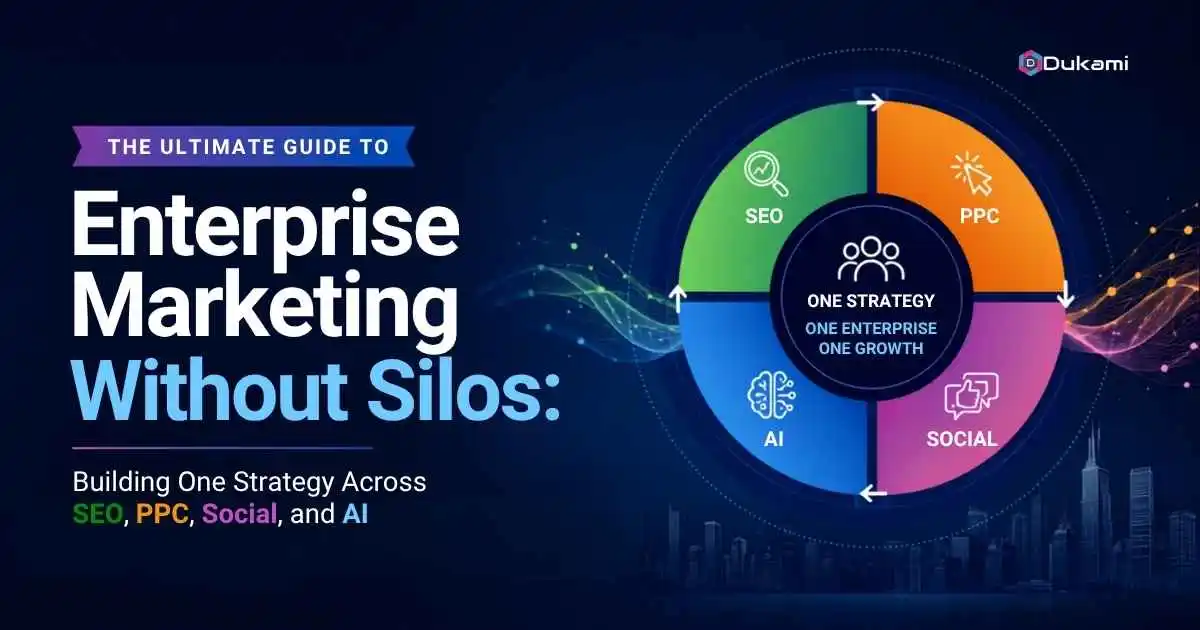
Enterprise marketing can resemble an orchestra with talented musicians playing different songs. SEO may chase rankings, PPC may chase clicks, and social teams may chase engagement. Meanwhile, AI may sit apart as an experiment.
Each team can perform well alone, yet the business may hear noise instead of music. The real advantage appears when every channel follows one business direction. Data moves freely, teams share insights, and campaigns support the same customer journey.
That shift requires more than adding another platform or meeting. It requires one connected strategy that turns separate marketing efforts into one growth system.
Understanding the Challenges of Siloed Enterprise Marketing
Marketing silos often form naturally as enterprises grow. Teams gain separate goals, tools, budgets, dashboards, and reporting structures. Over time, these boundaries can create fragmented marketing strategies that work against each other.
One team may target a segment that another team already converted. Another may create content without knowing what paid campaigns need. These enterprise marketing challenges waste resources and weaken customer experience.
Poor cross-department communication also slows decisions. Marketing alignment issues become visible when teams cannot access the same data. As a result, leaders struggle to understand which efforts actually influence revenue.
The Importance of a Unified Marketing Strategy in Enterprise Settings
A unified marketing strategy gives every channel a shared destination. It connects audience insights, campaign goals, creative direction, budgets, and measurement.
An integrated marketing approach also helps enterprises create consistent customer journeys. Search can capture demand, while paid campaigns can accelerate important opportunities. Social channels can build trust, while AI can identify patterns across these interactions.
Strong enterprise marketing alignment reduces duplicated work and conflicting messages. Cross-channel marketing then becomes a coordinated system instead of several disconnected campaigns. Strategic marketing planning keeps teams focused on business outcomes rather than channel-specific wins.
How to Integrate SEO, PPC, Social Media, and AI for Maximum Impact
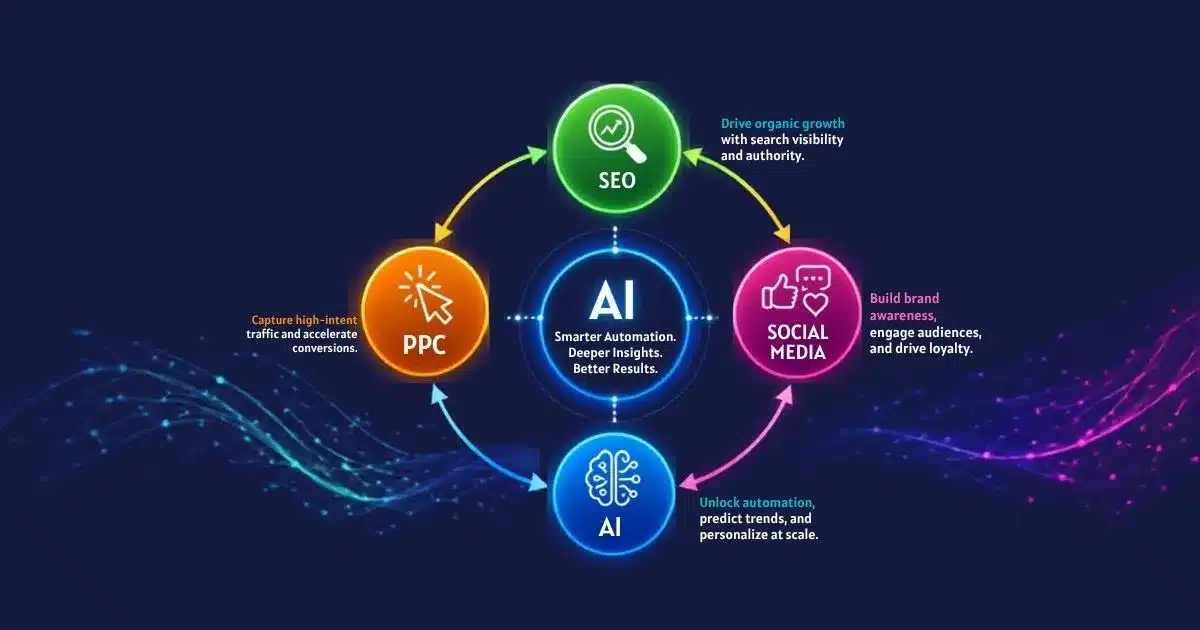
Integration starts with a shared audience and a shared set of business goals. Then, each channel receives a clear role within the customer journey.
An integrated SEO and PPC strategy can reveal valuable search insights. PPC data can highlight high-converting terms and audience signals. SEO teams can use those insights to prioritize content and organic opportunities.
A strong social media marketing strategy adds another layer of customer intelligence. Social engagement can reveal questions, objections, preferences, and emerging topics. Teams can then feed those insights into content, search, and paid campaigns.
AI in marketing can connect these signals at enterprise scale. AI can analyze large datasets, identify patterns, and support faster decisions. Cross-channel marketing integration becomes easier when platforms share useful data.
This requires a reliable marketing technology stack. The stack should connect analytics, advertising, CRM, content, automation, and customer data. Integration matters more than collecting tools.
Leveraging AI to Break Down Silos and Enhance Collaboration
AI marketing tools can become a shared intelligence layer for enterprise teams. They can summarize campaign data, surface trends, and organize information.
AI-driven marketing insights can help teams spot relationships between channels. For example, a social trend may explain a sudden search increase. A paid campaign may also reveal language that improves email or landing page performance.
Marketing automation can remove repetitive handoffs between teams. Automated workflows can route leads, update records, trigger reports, and flag unusual performance. This gives specialists more time for strategy.
AI for collaboration can also improve knowledge sharing. Teams can use shared AI systems to summarize meetings, organize learnings, and answer routine questions. However, people should still review important recommendations before making major decisions.
This approach supports data-driven marketing without removing human judgment. AI should strengthen collaboration, not create another silo.
Best Practices for Building and Managing a Cohesive Enterprise Marketing Team
Marketing team collaboration starts with shared goals. Every function should understand how its work contributes to revenue, retention, and customer experience.
Cross-functional teams can bring SEO, paid media, social, content, sales, and technology together. These groups should solve customer problems rather than protect channel boundaries.
Enterprise marketing leadership plays a critical role here. Leaders should define shared priorities, ownership rules, reporting standards, and decision paths. Clear responsibilities prevent duplicate work and reduce delays.
Team alignment strategies should also include regular planning sessions. Teams can review audience changes, campaign results, upcoming launches, and resource needs together. Shared planning creates context before execution.
Marketing workflow optimization can further reduce friction. Standard briefs, connected dashboards, shared calendars, and automated approvals can simplify daily operations. Make collaboration easier than working alone.
Measuring Success: KPIs and Analytics for Integrated Marketing Strategies
Integrated marketing needs measurement that reflects the whole customer journey. Channel metrics matter, but leaders should connect them to business outcomes.
Marketing KPIs can include qualified leads, revenue, conversion rates, customer acquisition cost, retention, and pipeline contribution. These measures reveal whether marketing creates meaningful business value.
Cross-channel analytics helps leaders understand how channels influence one another. A customer may discover a brand through social, search later, and convert through paid media. Looking at only the final click can hide that journey.
Unified marketing metrics create a common language across teams. Marketing performance measurement then becomes easier because everyone works from comparable definitions. ROI tracking can also improve budget decisions across channels.
Enterprises should combine channel reports with customer and revenue data. This creates a clearer view of marketing impact.
FAQ's
Conclusion
Enterprise marketing transformation does not require abandoning specialist teams. Instead, it requires connecting their expertise around shared customers and business outcomes.
Marketing synergy grows when SEO, PPC, social, and AI exchange insights continuously. Teams then move from isolated execution toward strategic marketing success.
The integrated marketing future belongs to enterprises that connect people, data, technology, and decisions. That connection creates room for marketing innovation without sacrificing control.
A cohesive strategy turns separate channels into one growth engine. It helps enterprises respond faster, spend smarter, and create stronger customer experiences.
Don't wait to bring your digital dreams to life. Contact us now to schedule a consultation and let's take the first step towards your project's success.
