Table of Content
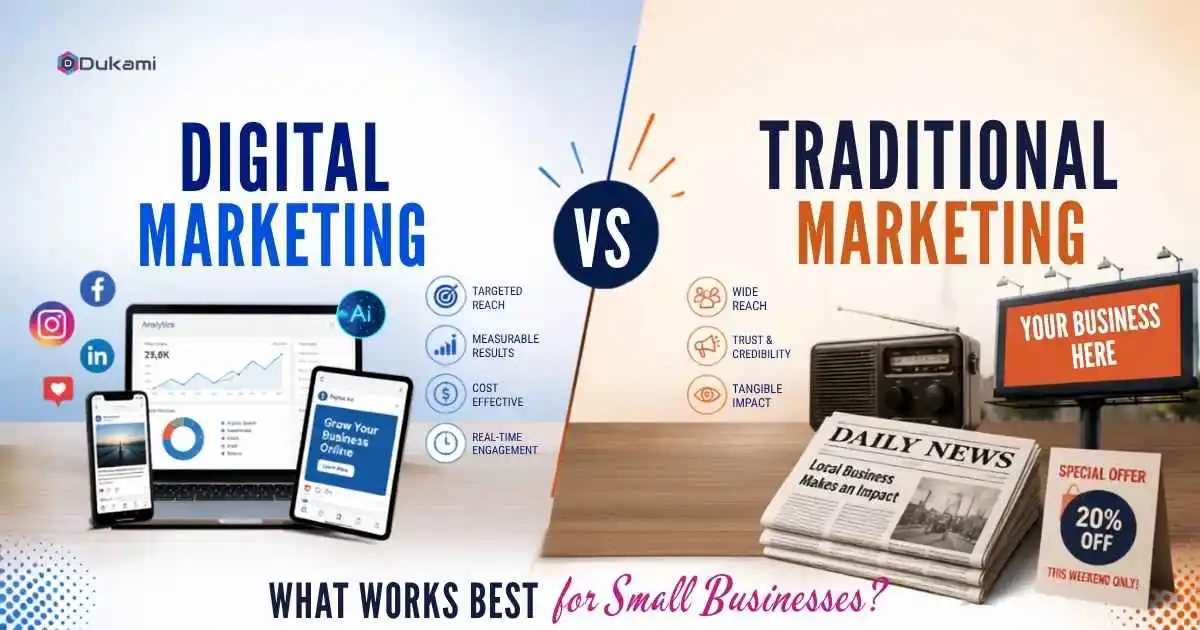
What if the marketing method you trust most is not the best one for your business?
Small businesses have more ways to reach customers than ever before. However, choosing the right approach can become confusing.
Digital marketing offers online reach, detailed targeting, and measurable results. Traditional marketing still helps businesses build local recognition and personal connections.
So, which approach should a small business choose?
The answer depends on your audience, goals, budget, and marketing needs. Understanding both approaches can help you make a smarter decision.
Understanding Digital Marketing and Its Benefits for Small Businesses
Small Businesses Digital marketing helps reach customers through online channels. It can also provide flexible options for businesses with different budgets and goals.
Online marketing: includes several channels that work together to attract and engage potential customers. These channels include websites, search engines, social platforms, and email.
Social media marketing: helps businesses connect with customers where they spend time online. Businesses can share updates, answer questions, and build stronger customer relationships.
SEO for small businesses: helps companies improve their visibility in search results. Better visibility can help attract people who already need specific products or services.
Content marketing: gives businesses another way to educate and engage their audiences. Helpful blogs, guides, videos, and other content can support the buying journey.
Email marketing helps businesses stay connected with existing customers and potential buyers. Companies can share offers, updates, educational content, and important announcements.
Digital channels can also support cost-effective advertising. Businesses can adjust campaigns based on performance and available budgets.
The Role and Impact of Traditional Marketing in Small Business Growth
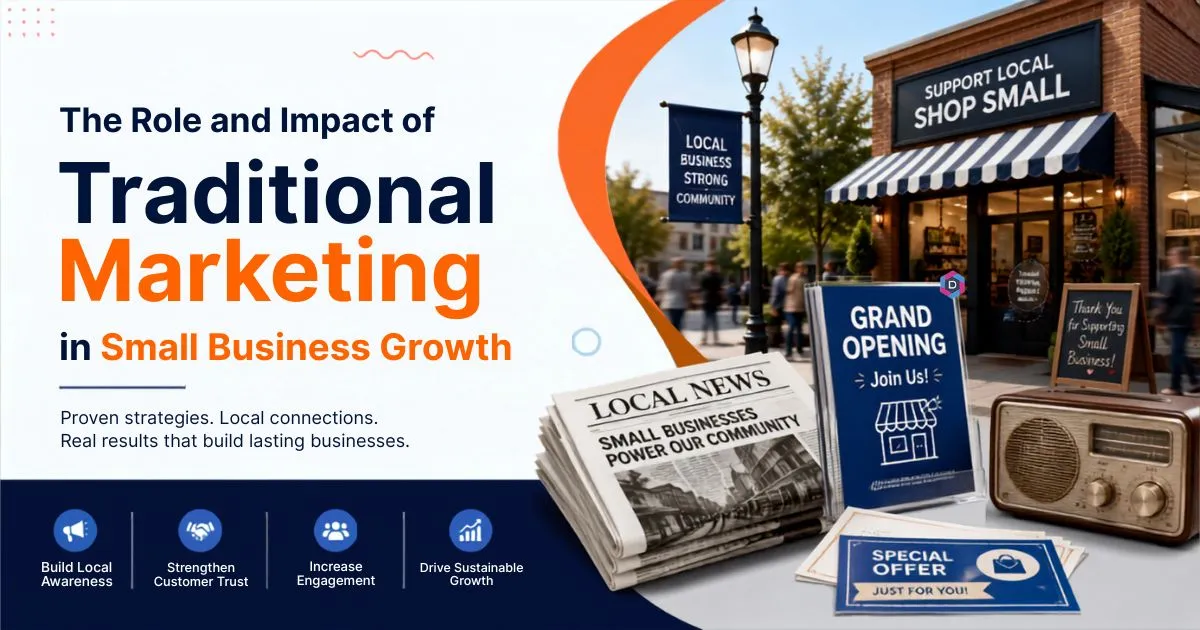
Traditional marketing still has value for businesses that depend on local awareness. It can create visibility through physical and broadcast channels.
Print advertising includes newspapers, magazines, brochures, flyers, and other printed materials. These formats can help businesses reach audiences within specific communities.
Direct mail gives businesses a physical way to communicate with potential customers. Postcards, catalogs, coupons, and promotional letters can support local campaigns.
Radio and TV ads can provide broad exposure within selected markets. These channels can work well when businesses want to build wider brand recognition.
Event marketing allows businesses to meet customers in person. Trade shows, community events, and local gatherings can create valuable face-to-face interactions.
Local promotions can also encourage immediate action. Discounts, community offers, and seasonal promotions can attract nearby customers.
Traditional methods can strengthen brand awareness over time. They can also support businesses whose customers value personal experiences and local connections.
However, traditional marketing often provides less detailed tracking. Businesses may find it harder to connect individual responses with specific campaigns.
Comparing Costs: Digital Marketing vs Traditional Marketing for Small Budgets
Small businesses often need to make every marketing dollar count. Therefore, understanding costs can help owners choose more suitable channels.
Your marketing budget should reflect your goals, audience, and expected results. No single channel works equally well for every business.
Digital marketing often allows businesses to start with smaller amounts. Companies can also adjust campaigns based on results and available resources.
Traditional marketing can involve higher upfront costs. Printing, distribution, production, and media placement can increase overall expenses.
An ROI comparison should consider more than the initial campaign cost. Businesses should also examine leads, sales, customer value, and long-term results.
Affordable marketing strategies can include organic search, social media, email, and useful content. These methods can reduce dependence on paid placements.
Businesses should also monitor cost per lead when generating inquiries. This metric can help compare the efficiency of different campaigns.
Better marketing spend efficiency comes from investing in channels that produce meaningful business results. Testing different methods can help identify those opportunities.
The cheapest channel is not always the best choice. A slightly higher investment can produce better customers and stronger long-term returns.
Target Audience Reach: Which Method Connects Better with Customers?
Reaching the right people matters more than reaching the largest possible audience. Businesses need channels that match how their customers discover and evaluate products.
Digital platforms offer advanced customer targeting options. Businesses can target audiences based on interests, locations, behaviors, and other available signals.
Audience demographics can also guide campaign planning. Businesses can adjust messaging based on age groups, locations, interests, or customer needs.
Digital channels support personalized marketing in many ways. Businesses can tailor emails, advertisements, content, and offers for different audience segments.
Traditional marketing can still perform well for specific communities. Print, radio, direct mail, and events can create strong local vs global reach.
Digital marketing can extend beyond geographic boundaries. A small business can potentially reach customers across cities, states, or countries.
Traditional channels often provide strong local exposure. This makes them useful for businesses serving specific neighborhoods or communities.
Both approaches can improve customer engagement when businesses use relevant messages. The right choice depends on where your customers spend time.
Measuring Success: Analytics and Tracking in Digital vs Traditional Marketing
Marketing becomes easier to improve when businesses can measure what works. However, digital and traditional channels offer different levels of tracking.
Marketing analytics provides information about digital campaign performance. Businesses can review traffic, engagement, leads, purchases, and other customer actions.
Campaign tracking can show how people interact with online marketing efforts. Businesses can identify which channels generate valuable visits or inquiries.
Conversion rates help measure how effectively campaigns encourage desired actions. These actions might include purchases, form submissions, calls, or sign-ups.
Traditional marketing can be harder to track precisely. Businesses may need coupons, dedicated phone numbers, surveys, or promotional codes.
Data-driven marketing helps businesses make decisions using actual performance information. This approach can reduce guesswork and improve future campaign planning.
Businesses should also monitor relevant performance metrics for each channel. The right metrics depend on the campaign's purpose and business goals.
Digital marketing generally offers more detailed reporting. However, traditional marketing can still deliver measurable results with proper tracking methods.
Hybrid Marketing Strategies: Combining Digital and Traditional for Maximum Impact
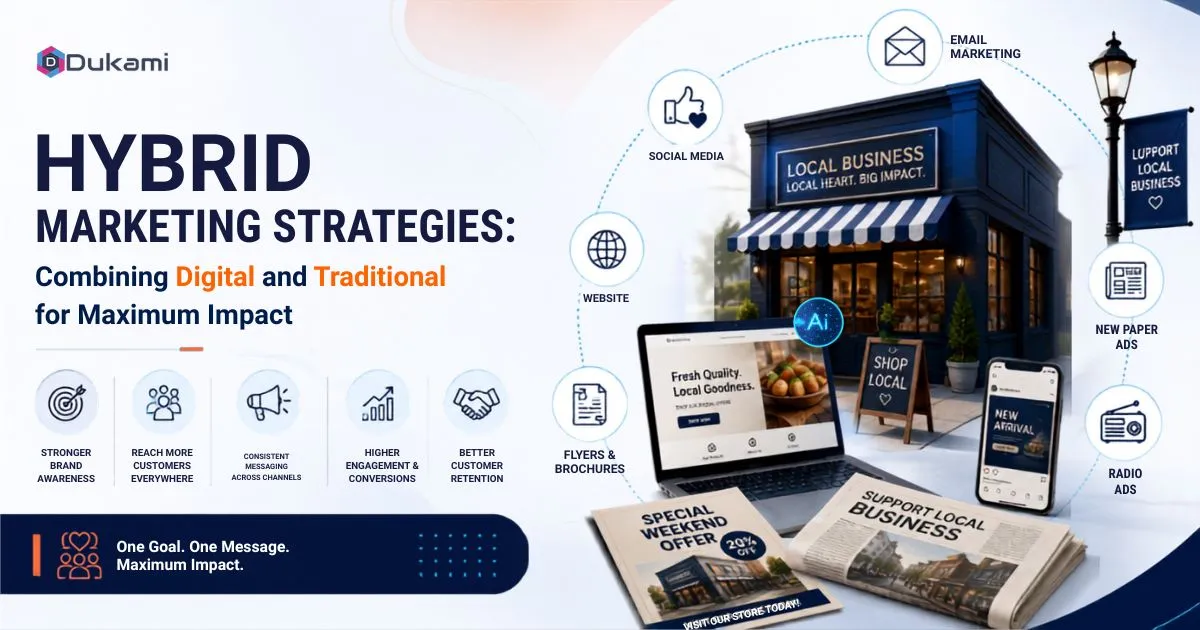
Businesses do not always need to choose one marketing method. Combining channels can create a stronger and more consistent customer experience.
Integrated marketing connects different channels around a shared message and business goal. This approach helps customers receive consistent information across multiple touchpoints.
Cross-channel campaigns can connect offline and online activities. For example, a local event can promote a website, social page, or email signup.
A balanced marketing mix can help businesses reach different customer groups. Each channel can support a specific role within the overall strategy.
Small businesses can use several small business marketing tactics together. A flyer can promote an online offer, while email can support a local event.
An omnichannel approach takes this connection further. It creates a smoother experience as customers move between different channels.
For example, a customer might see a local promotion first. They may then visit the website and follow the business on social media.
This combination can strengthen awareness, engagement, and customer retention. It also allows businesses to use the strengths of both marketing approaches.
FAQ's
Conclusion
There is no universal winner in the digital marketing vs traditional marketing debate. Each approach offers different advantages for small businesses.
Digital marketing provides strong targeting, flexible spending, and detailed performance data. Traditional marketing can create local visibility and memorable offline experiences.
Your best approach should match your customers and business goals. It should also fit your available resources and expected return.
Many small businesses can benefit from combining both methods. A thoughtful mix can connect online discovery with real-world customer experiences.
The goal is not to use every available channel. Instead, focus on the channels that help your business reach, engage, and convert the right customers.
With the right strategy, small businesses can turn their marketing spend into meaningful growth.
Don't wait to bring your digital dreams to life. Contact us now to schedule a consultation and let's take the first step towards your project's success.