
Table of Content
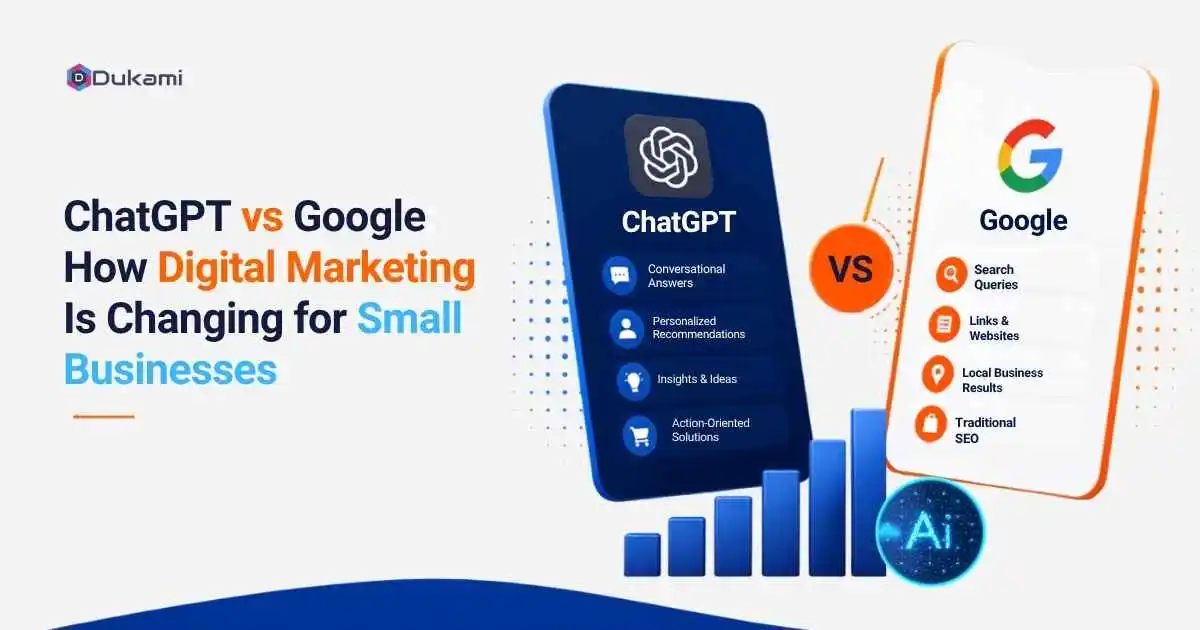
Small businesses once relied heavily on Google to reach customers online. Today, customers also use AI tools to discover information, compare options, and solve problems.
This shift is changing how businesses approach digital marketing. Google still drives search traffic, leads, and sales for countless small businesses.
However, ChatGPT introduces a different way to connect with potential customers. It can answer questions, generate ideas, and support direct conversations.
This creates an important question for business owners. Should small businesses focus on ChatGPT or continue investing in Google?
The answer is not either-or. Instead, businesses need to understand how both platforms serve different customer needs.
Understanding the Roles of ChatGPT and Google in Digital Marketing
ChatGPT and Google help customers find information, but they work in different ways. Understanding these differences can help small businesses build stronger marketing strategies.
Google mainly connects users with websites, businesses, products, and services. It remains central to search engine optimization, paid advertising, and local discovery.
Customers can search for a service, compare businesses, and visit websites. They can also use Google Maps and Google My Business to find nearby companies.
ChatGPT provides a more conversational experience. Users can ask detailed questions and receive responses within one interaction.
This makes ChatGPT digital marketing different from traditional search marketing. The platform can support content planning, customer questions, research, and business communication.
Google focuses heavily on helping users discover external information. ChatGPT focuses more on understanding questions and generating useful responses.
Both platforms therefore influence different stages of the customer journey. Small businesses can benefit from understanding where each platform fits.
How ChatGPT Is Revolutionizing Customer Engagement for Small Businesses
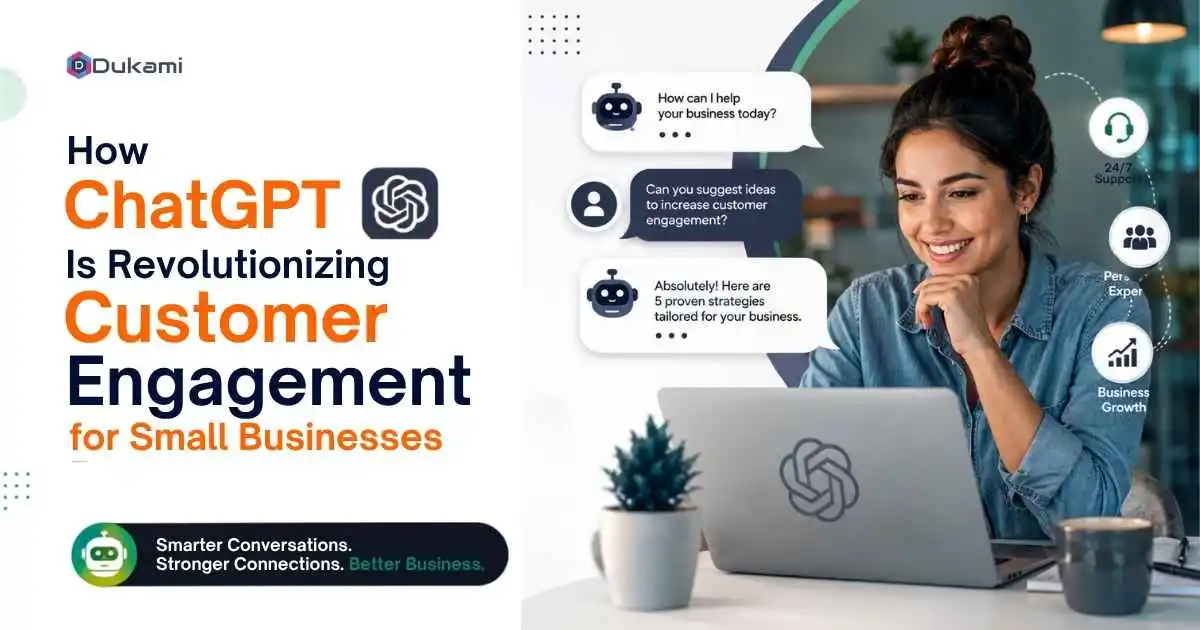
Small businesses often struggle to provide fast, personalized customer support. Limited staff can make it difficult to respond to every customer question quickly.
AI chatbots can help businesses handle common questions around the clock. They can support basic inquiries without requiring constant human involvement.
Businesses can also use ChatGPT customer interaction to create more conversational experiences. Customers can receive answers that feel more direct and personalized.
For example, a business can use conversational tools to explain services. They can also answer common questions about pricing, availability, or processes.
This approach supports conversational AI and chatbot marketing. It also creates opportunities for more personalized marketing across different customer touchpoints.
ChatGPT can support content creation as well. Businesses can use AI content creation for ideas, drafts, product descriptions, and social media concepts.
However, businesses should still review AI-generated content before publishing it. Human oversight helps maintain accuracy, brand consistency, and a natural voice.
These capabilities make ChatGPT one of many useful small business AI tools. Yet, businesses should treat AI as a support system, not a complete marketing strategy.
The Continuing Importance of Google in SEO and Paid Advertising
Google remains a major part of online customer discovery. People still use search engines to find businesses, products, services, and local providers.
Strong Google SEO strategies can help small businesses attract relevant organic traffic. Businesses can optimize their websites around valuable keywords and customer needs.
Search engine optimization also helps businesses build long-term visibility. Well-optimized pages can continue attracting visitors without paying for every click.
Google also provides powerful paid advertising options. Google Ads for small businesses can place offers in front of people actively searching for solutions.
This makes paid search marketing valuable for businesses seeking faster visibility. Advertisers can target specific searches, locations, audiences, and business goals.
Local businesses also benefit from local SEO. Accurate business information can help customers discover nearby companies through Google Search and Maps.
This remains important for restaurants, service providers, retailers, and other local businesses. Customers often want businesses they can visit, call, or contact quickly.
Google therefore remains essential despite the growth of AI platforms. Small businesses should not abandon proven search strategies while exploring new technologies.
Comparing ChatGPT and Google: Strengths and Limitations for Small Business Marketing
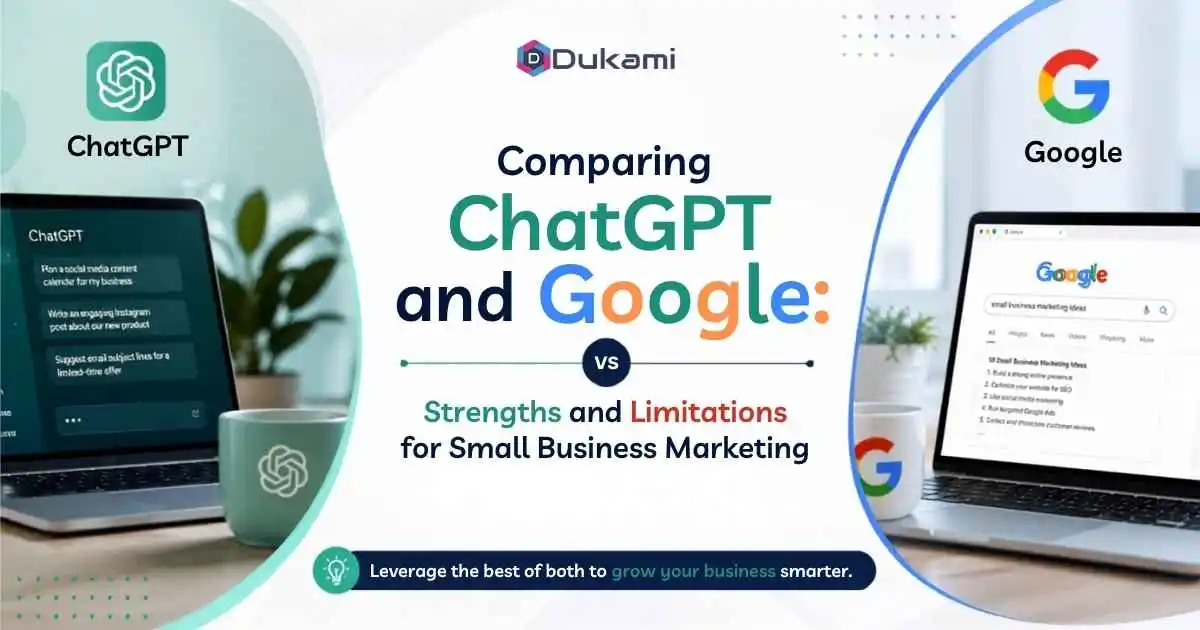
The ChatGPT vs Google marketing discussion should focus on differences rather than competition. Each platform offers unique advantages for reaching potential customers.
Google excels at discovery. It helps users find websites, businesses, reviews, locations, products, and services.
ChatGPT excels at conversation. It can help users explore ideas, ask follow-up questions, and receive synthesized responses.
Google also provides established advertising options. Businesses can measure clicks, conversions, search terms, and campaign performance.
ChatGPT offers strong support for content and customer communication. It can also help businesses streamline repetitive marketing tasks.
However, both platforms have limitations. Google rankings can take time, especially for competitive keywords.
Paid search can also become expensive when campaigns lack proper targeting and optimization. Businesses must manage budgets carefully.
ChatGPT also has limitations. AI responses can contain errors or lack important context.
Businesses must therefore review AI outputs before using them with customers. They also need to protect customer information and maintain appropriate privacy practices.
The biggest lesson is simple. Businesses should understand each platform instead of treating one as a replacement for another.
Integrating ChatGPT and Google to Maximize Digital Marketing Impact
The strongest approach combines AI capabilities with established search marketing practices. This creates hybrid marketing strategies that support different customer needs.
Businesses can use Google to understand what customers search for. They can then use ChatGPT to explore content ideas around those needs.
For example, keyword research can reveal common customer questions. ChatGPT can help organize those questions into useful content topics.
This approach supports AI and SEO integration. It also helps businesses create content that addresses specific search intent.
Businesses can also use AI to support marketing automation. Automated workflows can help organize repetitive tasks and improve response times.
Google can then bring qualified visitors to optimized pages. ChatGPT can support customers after they arrive through conversational experiences.
This creates a connected customer journey across multiple channels. It supports multi-channel marketing without forcing businesses to choose one platform.
The goal should not be replacing Google with AI. Instead, businesses should focus on leveraging AI with search engines.
This creates stronger marketing synergy between technology, search visibility, and customer engagement. As customer behavior changes, flexible businesses can adapt faster.
FAQ's
Conclusion
Don't wait to bring your digital dreams to life. Contact us now to schedule a consultation and let's take the first step towards your project's success.
